Strategic Tech: Avoiding the "Ad Hoc" Trap in Campus Safety
In the wake of a high-profile campus incident or an unexpected infusion of year-end funding, the pressure on a Public Safety Executive to "do something" is immense. Often, that "something" takes the form of a major technology purchase.
Vendors are quick to offer the latest public safety tech buzzwords: AI-driven predictive analytics, autonomous patrol robots, or facial recognition. On all the marketing material, these look like magic solutions that will instantly cure our problems. In the boardroom, they look like a decisive response to community anxiety.
But research and experience tell a different story. According to a national study of law enforcement agencies, while 96% of departments have implemented one or more core technologies, the vast majority of these adoptions are "ad hoc" rather than strategic.
As an executive who has managed these transitions, I’ve seen how buying expensive technology in haste produces subpar results or is eventually abandoned because it doesn't fit the agency's mission or staffing reality.
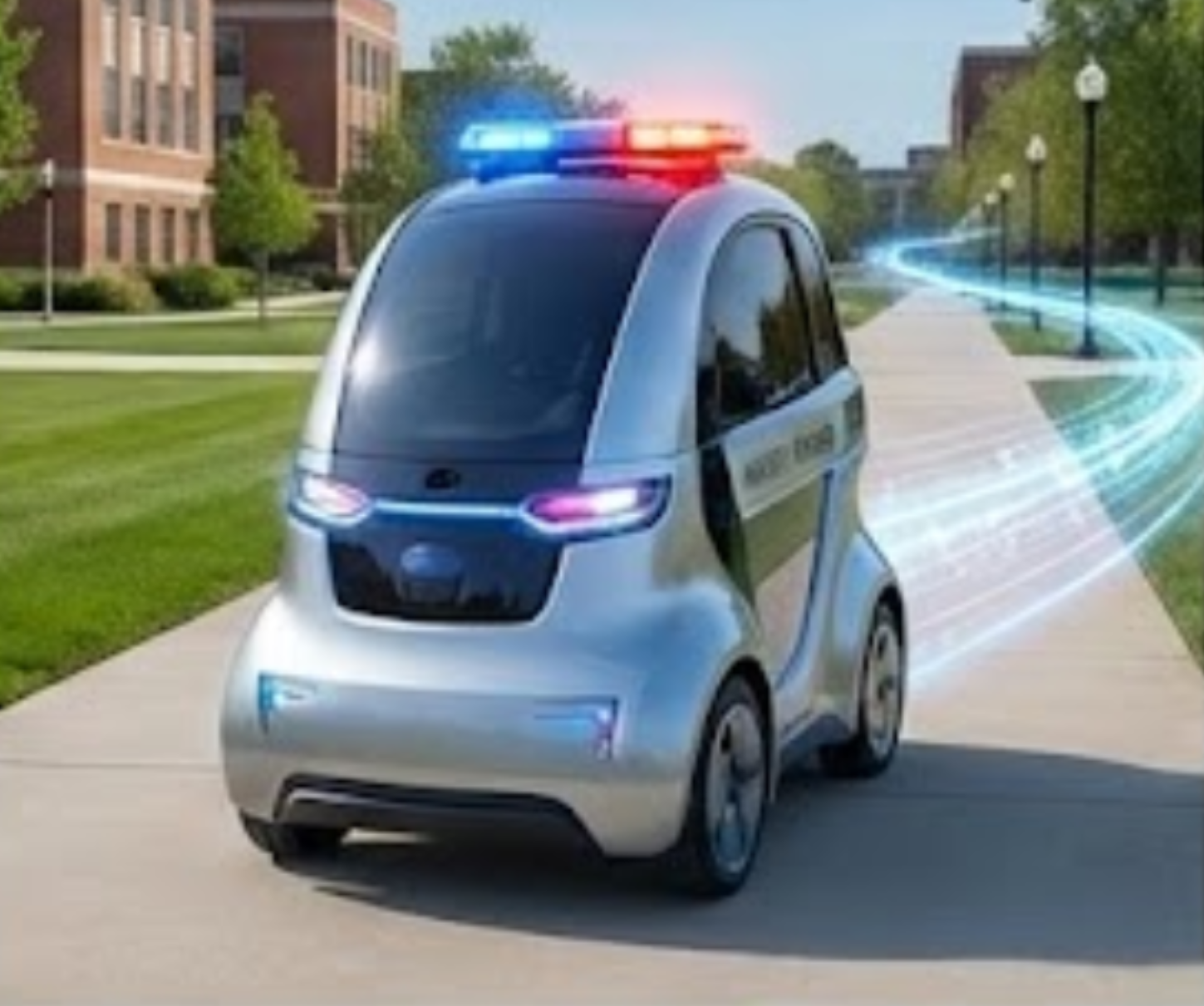
The "Shiny Object" Syndrome vs. Foundational Strength
The most effective technologies on a campus are often quietly in the background, not the headline-grabbing initiatives. While drones and robots get all the attention, the true workhorses of safety are Computer-Aided Dispatch (CAD) and Records Management Systems (RMS).
These systems have the most overall impact on policing as they are the foundation for all other analytical tools. If these systems are outdated or don't "talk" to your newer tools, the most advanced AI in the world won't help you.
Before purchasing new technology, ensure they integrate well with existing systems and ask the hard questions—no “black box” purchases. You need to know how the technology works.
We had a large number of cameras on rooftops, on building walls, and on poles around campus. The amount of storage needed was immense. Our team at Telecommunications understood the importance of a robust yet stable system.
Before AI was mentioned in just about every piece of safety technology, there were analytic capabilities. There were some very polished methods for reducing personnel hours when reviewing large amounts of video. There were also anomaly systems to flag unusual situations and movements within the camera view.
Although we had a strong camera infrastructure, we weren’t comfortable at the time with allowing an outside source to enter our system. Several initiatives were still in early stages, and the risk wasn’t worth taking at the time.
It was very tempting to jump into the latest camera technology, but at what cost? Now, these systems are much more stable and secure, and they integrate more seamlessly with existing technology, but they still require rigorous vetting before leaping.
A strategic leader ensures the foundation is solid before adding the bells and whistles. Before you buy the latest analytical tool, ask: Does it integrate with our systems, or will we just create another data silo?
The Hidden Cost: The Human in the Loop
The biggest mistake in safety procurement is forgetting that technology creates a data deluge. If you purchase 200 Body-Worn Cameras (BWCs) or a campus-wide License Plate Reader (LPR) system, you aren't just buying hardware. You are committing to a massive increase in data management:
Who will ensure cameras are properly maintained, or be the liaison with the District Attorney’s Office?
Who will monitor the LPR alerts in real-time?
Who will handle software updates and coordinate with the tech vendors?
Technology is a force multiplier only if you have the "force" to manage it. If you don't budget for the personnel to handle the output, the technology becomes a burden that actually pulls officers away from the street.
At Temple several years ago, we moved to equip all police officers with Tasers. It made excellent sense to give police officers another less-than-lethal tool. We saw dramatic decreases in baton and other physical use, particularly when involved with a severely mentally ill individual. The Taser reduced the risk of officer injury and the risk to the individual involved.
The Taser required data and physical maintenance, and individuals to coordinate this. The same held when we provided Body-Worn Cameras to all police officers and supervisors on patrol. Again, human resources were needed to oversee the program, and we used existing resources.
Fortunately, we had very capable and dedicated personnel who did an outstanding job with both initiatives. However, in hindsight, having the ability to earmark additional people to supervise these programs would have been immensely helpful.
Moving from Perception to Metrics
One of the most revealing findings in recent research is the widespread lack of formal metrics for technology success. Most agencies rely on leadership's "perceptions" to decide whether a tool is working.
In a university environment, where budgets are under constant scrutiny, "vibes" aren't enough. Before signing a contract, you must define what success looks like:
Is it a reduction in response times?
Is it an increase in the number of successful investigations?
Is it a specific rate of student adoption for a safety app?
If you can’t measure it, you shouldn't be buying it.
From Anxiety to Advocacy: Questions for the Boardroom
To move beyond "Security Theater" and toward proper strategic safety, university leadership should ask three questions before every tech purchase:
What specific problem is this tool solving, and is that problem a recurring trend or a one-time incident?
Do we have the staff capacity to manage the data this tool will generate 24/7?
Does this purchase follow a long-term strategic roadmap, or are we just reacting to the latest buzzword?
Key Takeaway
Technology should never be a reaction; it should be an acceleration of a pre-existing strategy. Avoid the ad hoc trap by focusing on integration, staffing, and measurable outcomes. The goal isn't to have the most technology—it’s to have the most effective technology.